Who Without an Element of Vulgarity Can Become a Work of Art
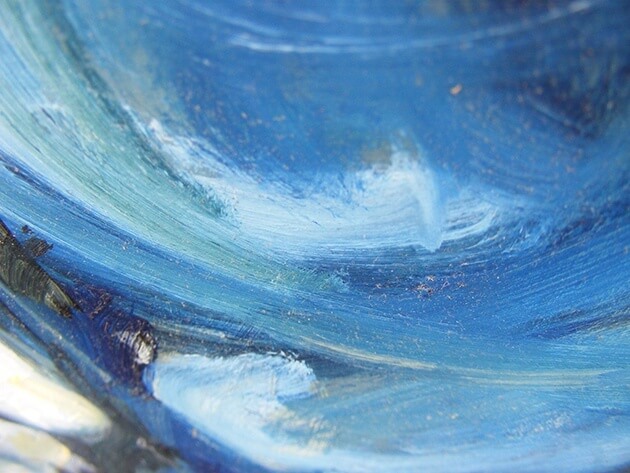
E'er wondered why art and emotion are linked so strongly?
"Truthful art lies in a reality that is felt."
– Odilon Redon
Why are art and emotion linked so strongly? Whether we know information technology or not, we make emotional art every time we pick up our pencils, dip our brushes in paint or start chipping away at stone or wood.
Still, what'southward actually going through our minds when we work?
Throughout history, artists have sought to connect with their audience through many different channels. Whether using particular colors, representing certain scenes or communicating symbols that work on a subconscious level, each work of art is designed to convey a bulletin to the viewer as seen through the optics of the artist.
In the past, inquiry has suggested our emotional and aesthetic responses to fine art were based on a basic stimulus. Nonetheless, recent enquiry by Pinchas Noy and Dorit Noy-Sharav has institute our responses to fine art run much deeper than that.
These fresh theories propose that when we view art, nosotros're drawing on associations that date back to the early days of human evolution.
Why We're Hard-wired For Subject Matter
Take you always seen those online posts showing tomatoes cut in half to reveal an image of Jesus or cups of coffee that seem to depict a human face up in the froth on height? Humans are hard-wired to look for recognizable features in everything, then it'southward no surprise nosotros brand the same associations when we look at art.
When we first look at an image, we're using different parts of our brain to process the information before our eyes. There are three stages to this. The outset is a state of defoliation as we attempt to work out what this piece of art represents (is that a mural? Is that a figure?).
The second is when we identify what the image represents and feel a sense of relief equally the pleasure centers of our encephalon are triggered. The final stage is when we assign meaning to the image and get an emotional response to the slice of emotional art on testify.
Then far, and then good. Nevertheless, this is when things get really interesting. According to some new enquiry, what'due south really happening here is that we're cartoon on some of the same emotional responses as our ancient ancestors.
In fact, it looks like art and emotion have always had an unbreakable link to each other.
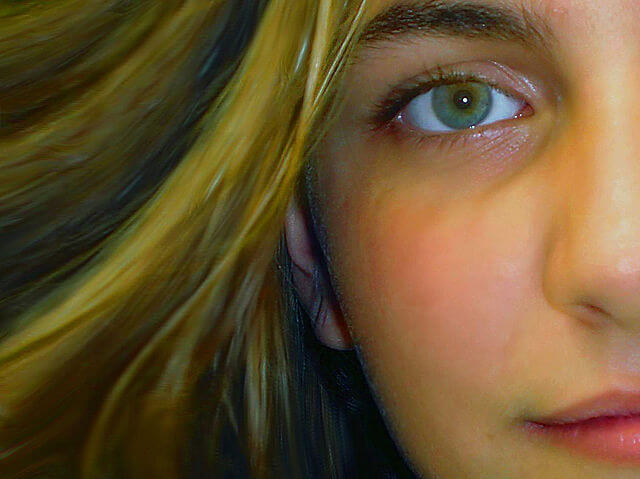
Humans are programmed to look for symmetry everywhere –
even in someone's facial features
Symmetry And Emotional Art
Symmetry has often featured prominently in art for a very good reason – we're programmed to look for information technology. Whether avoiding predators, chasing prey or finding a mate, our cavern-domicile forebears looked for symmetry (specifically what'due south termed bilateral symmetry) to assistance them brand sure decisions.
With this in heed, it's no surprise some of the globe's virtually cute people are also those said to have the most symmetrical features.
Wide Open Spaces And Happiness
Whether standing at the top of a mountain or taking a solitary walk on the beach or in the state, almost of united states feel a deep sense of calm when we're in wide open up spaces.
Nosotros know art can inspire similar emotions too, but according to new research, the reasons for this link between art and emotion also go back to our prehistoric roots.
Put but, our ancient ancestors knew having a clear, open view was good. It meant they could travel safely on foot without existence pounced on past predators. It meant there were no threats lurking in the shadows.
In the same way, vivid paintings with a sense of open space elicit similar feelings of relaxation or contentment in viewers, while night, more than oppressive works of art cause people to feel more broken-hearted.
When looking at a slice of fine art, nosotros're effectively seeing through the same eyes as our predecessors.
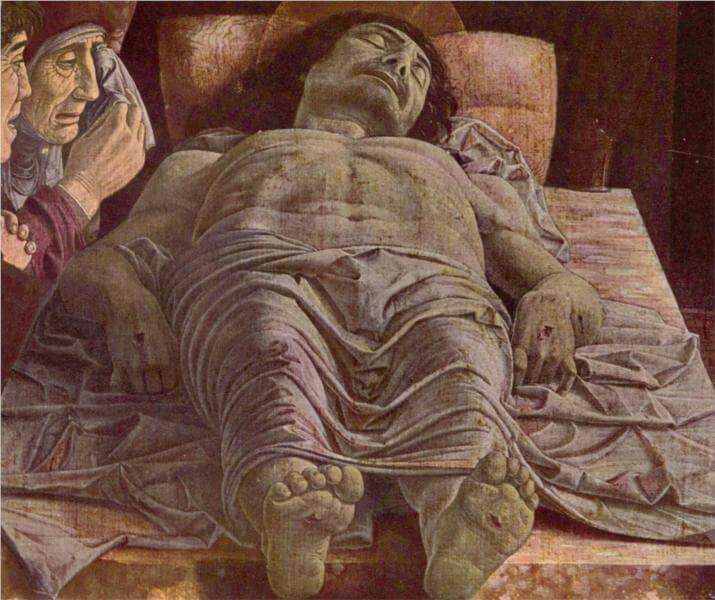
Lamentation of Christ, by Andrea Mantegna, 1478 – an incredibly moving and emotional painting
Deep Emotional Reponses To Fine art
Of course, almost people's responses to art run far deeper than simply feeling happy or anxious. When we connect with a painting, drawing, sculpture or installation, nosotros're doing so on a complex emotional level, or experiencing what some researchers accept called 'meta emotions'.
What are these? They're when several different emotions are triggered at the aforementioned time. They're when a work of art manages to convey both complication and technical skill. They're when we truly engage with the emotional fine art earlier us.
For example, an expertly-painted epitome of Christ on the cross will satisfy our need for symmetry, but the emotional impact of this prototype will also bear upon united states on a deeper level.
Yet, imagine if the image of Christ wasn't so well painted – say, for example, the anatomy was conspicuously wrong. Would information technology yet get the same response?
Enquiry says non. It seems everything has to be perfectly combined in lodge for a work of art to produce meta emotions in usa.
Interestingly, the same applies to a technically-perfect depiction of something that lacks emotion. Can you call up the last fourth dimension you were moved by a technical drawing?

The connections we make equally children (such as with pets) can frequently influence our emotional response to things equally adults
Perceptual and Conceptual Changes
When we're infants, we make connections in our minds to grasp unproblematic concepts. And it's hither that the link between art and emotion is often established. For example, we know the family unit pet is a dog or a cat, and we soon acquire that nutrient lives in the kitchen cupboards and the fridge!
Notwithstanding, as we develop, these connections become more than conceptual as we begin to associate certain images with emotions. For example, nosotros might come to associate a sunny day with playing in the park etc.
These conceptual associations in our brain play a large part when we brand or look at art. Every marker you make, every colour you use, every paradigm you see is triggering a whole load of different responses in yous.
Some of these emotional responses to art tin be unique to you as an individual, while others are more deeply rooted in a universal human consciousness.
"The emotions are sometimes and then strong that I work without knowing it."
– Vincent Van Gogh
What Happens When Yous Brand Fine art?
When y'all make art, you lot're making some deep connections. You're combining your own emotions and conceptual associations with your technical knowledge. You're trying to share your own experiences of life with those of your viewers. Whether you lot know it or non, you're making emotional fine art.
In doing and then, you're calling on the hidden parts of your listen when making decisions in your composition, subject thing and the colors you lot use. Think dorsum to our ancient ancestors – does that landscape you're painting actually take a much deeper meaning than you thought?
Learning how to translate these subconscious emotions into art and communicate them to others takes fourth dimension. It's part of becoming an artist. There will be many times when others don't see what y'all were trying to portray.
Existence able to learn from this and develop – to truly combine art and emotion – is to embark on a fascinating journey that began centuries agone.
Source: https://www.pencilkings.com/art-and-emotion/
0 Response to "Who Without an Element of Vulgarity Can Become a Work of Art"
Postar um comentário